Development PathMake your next move.
Skilled trades · School guide
Culinary school: find a route into a working kitchen
Enjoying cooking is a good reason to explore the field. It is not yet a reason to borrow for a culinary degree. Before choosing a school, find out whether you enjoy the pace and repetition of professional food service. Preparing the same dish accurately for a busy service is a different task from experimenting at home.
A closer look at culinary
Explore culinary arts
Explore professional cooking and culinary career paths in this episode of WQED’s Future Jobs.
Listen to this article6:06
AI narration of the career guide.
Your place is saved on this device.
Kitchen RushCook, build, and serve the order. Play
TRY CULINARY ARTS
Try running a busy kitchen!
Choose a menu, then Start the lunch rush. Cook the ingredients, assemble each order, and serve before its timer runs out. Drag items or tap an item and its destination.
Practice sequencing, timing, and getting an order right. A simplified cooking game with ready-to-use ingredients; game timings are not cooking instructions.
01 / Build your foundations
School is one route into the kitchen
You can learn through a culinary program, an apprenticeship, or work experience with structured training. These routes are worth comparing on the quality of instruction and the amount of supervised practice they provide.
| Route | The question to ask |
|---|---|
| Certificate or diploma | Which practical skills will I be able to demonstrate by completion? |
| Associate degree | How do kitchen courses, general education, and an externship fit together? |
| Bachelor's degree | What additional preparation justifies the extra time and cost? |
| Apprenticeship | Who supervises training, how is progress assessed, and what education accompanies the job? |
| Employment with training | Will I learn across stations, or repeat a narrow set of tasks? |
ACFEF recognizes apprenticeship programs and accredits postsecondary culinary programs. Its directories can help you identify options. A program's status does not tell you everything about the day-to-day experience, so follow up with the school or apprenticeship sponsor.
Learn the foundations before narrowing your specialty
Pastry, restaurant cooking, catering, and institutional food service reward different strengths. A pastry-focused program may suit someone who enjoys precise production. A broader culinary program can give you room to compare several settings before deciding.
Read the curriculum for evidence of food safety, purchasing, and cost control alongside cooking technique. Ask how much time students spend producing food themselves. A demonstration is useful, but it cannot substitute for the repetitions needed to work accurately.
The job also involves teamwork under time pressure. Look for a teaching environment where instructors can explain a correction without normalizing abuse. Being able to take feedback is part of learning. Being treated badly is not a professional qualification.

02 / Explore practical training
Compare the program's kitchen with its promises
Ask about class size relative to workstations and instructors. Find out what equipment students use and whether there is experience serving actual customers. If a school promises industry connections, ask how those connections affect placements and who is responsible for arranging an externship.
Admission policies vary. Check the exact education requirements, any placement testing, and whether previous kitchen experience is expected. Do not assume every culinary program has the same testing policy or that a famous school's requirements apply elsewhere.
For an online offering, establish what you will cook, where you will cook it, and how the work will be evaluated. Ingredient expenses and access to suitable equipment belong in that decision.
Make the externship count
A useful placement exposes you to clear standards and provides feedback from someone who knows your work. Before accepting it, ask about the schedule, assigned duties, supervision, and whether it is paid. Know who to contact at the school if the placement does not provide the promised learning.
Keep a record of what you can do reliably. That might be organizing a station, producing a recipe at volume, or improving consistency after feedback. These details make stronger interview answers than a vague claim that you work well under pressure.
03 / Learn the business
A chef's experience: learning the business with the food
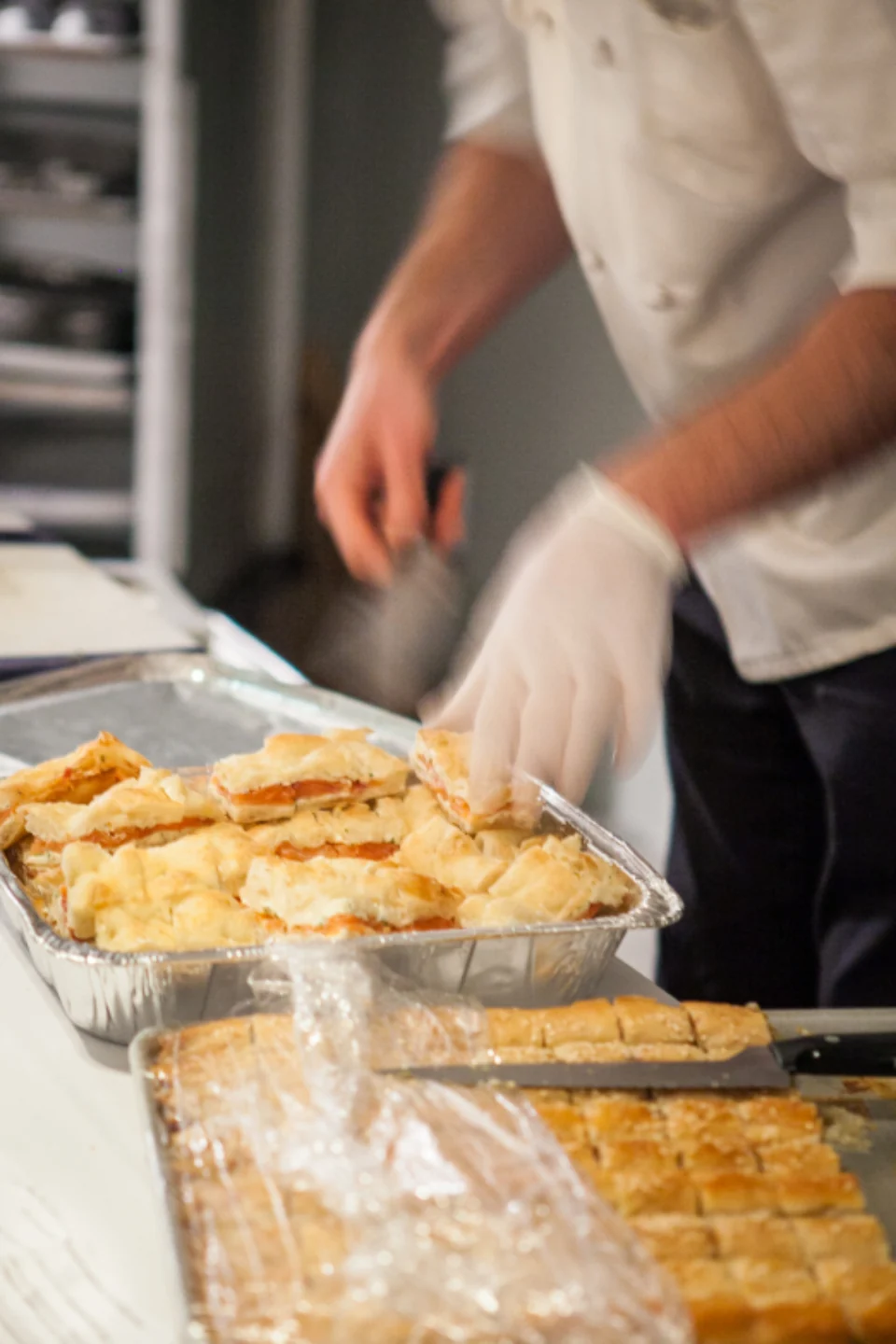
In a March 2015 BLS interview, chef Kimberly Brock Brown described an ACF apprenticeship in a hotel kitchen. Rotations exposed her to different stations, and she also learned to account for ingredients and time when pricing food. She later operated a catering and consulting business using shared or client kitchens.
Her experience illustrates a useful school-selection question: will the program teach you what it costs to deliver the food you want to make? This is a historical account of one person's route, not a claim that today's students will receive the same employer support.
Budget for an entry-level start
Chefs and head cooks are experienced roles. A new graduate may begin as a cook, and a school credential does not put someone immediately in charge of a kitchen. Plan borrowing around realistic entry-level opportunities in the places you could work.
Request a complete price for tuition, tools, uniforms, ingredients, and required placements. Include transport and housing if an externship is away from home. Compare scholarships and grants with the amount you would still need to borrow. Verify award renewal rules and the program's federal aid eligibility.
The ability to keep working while studying can change the comparison considerably. An inexpensive program with a schedule you cannot attend is not an inexpensive option for you. Ask what happens if you need to reduce your course load or pause training.

04 / Prepare for work
Prepare for the first job while you are still learning
A concise résumé should identify your training, relevant certifications, and actual kitchen responsibilities. Describe the scale and kind of work you have done without inflating your title. Ask instructors and placement supervisors before listing them as references.
If an interview includes a practical assessment, clarify its length, expectations, and compensation beforehand. Prepare to discuss organization and food safety as clearly as flavor. Ask about scheduling, training, and how a new cook progresses between stations.
Kitchen work can involve long periods standing and shifts that overlap with weekends and holidays. Consider the working conditions you can sustain. The best first step is often a conversation with a local chef or apprenticeship sponsor, followed by a comparison of programs that fit the work you actually want to do.
Explore next